Archive Coffee · Each coffee, documented as a numbered file.

Finca La Tormenta
Read Me First

One coffee, one file.

Archive Coffee documents each release as a numbered file: where the coffee comes from, who produced it, how it was processed and how it tastes. When a coffee sells out, its file stays in the archive.

Read the Brew Notes
Current File

File 04 · Sold out

Finca La Tormenta

Sierra de las Minas, Guatemala, 90h Cold Lactic Hidromiel

Expect a deep silky body, juicy sweetness, and pronounced florals.

Sold out 200 g

The Archive

4 files Past and present releases. A file stays here after its coffee sells out.

Archived

  • File 04

    Finca La Tormenta

    Sierra de las Minas, Guatemala, 90h Cold Lactic Hidromiel

    Expect a deep silky body, juicy sweetness, and pronounced florals.

    Sold out
  • File 03

    Cararango

    Vilcabamba, Loja, Ecuador, 96h Carbonic Maceration

    Expect high clarity with layered fruit and a refined sweetness. Dense, structured, alive.

    Sold out
  • File 02

    Finca Nogales

    Colombia, 7-Day Washed

    Sold out
  • File 01

    Finca Aurum

    Masanamaca, Loja, Ecuador, Anaerobic Natural

    Sold out

File 02 · Finca Nogales

The Finca Nogales coffee bag

File 02 · Sold out

Finca Nogales

Colombia

Spec sheet

Origin
Colombia
Producer
The Nogales Group
Variety
Typica
Process
7-Day Washed

Availability

Sold out

Story

The Nogales Group is a project born from family roots, guided by the spirit of community and shared purpose. What began as a traditional coffee farm has evolved into a collective vision that embraces both people and planet with care, empathy, and responsibility.

From the very start, their mission has been to honor the legacy of coffee production while daring to reimagine what a coffee farm can be. The process for this coffee begins with selective picking, where harvesters carefully choose only fully ripe cherries to ensure optimal quality from the very first step. Once collected, the cherries are cleaned and disinfected using treated water to remove impurities and reduce microbial load. They are then submerged in water for density sorting: defective or underripe cherries float and are removed, while the denser, high-quality cherries sink, allowing for precise selection. Next comes thermal fusion. The cherries are bathed in 90 °C water for 60 seconds - the longest protocol used - to pasteurize the coffee and release additional sugars that will support fermentation.

The cherries are then dry-depulped using a modified de-pulper designed to extract and retain as much juice as possible from the skins. This juice becomes the foundation of a seven-day fermentation, carried out in the coffee's own sugars and inoculated with pre-fermented yeasts recovered from the same variety, preserving both quality and terroir. After fermentation, the coffee proceeds to the drying stage, preparing it for stabilization and storage.

Thank you to Apex Coffee Imports for bridging the gap and allowing this coffee to be shared here in Montreal.

Photos

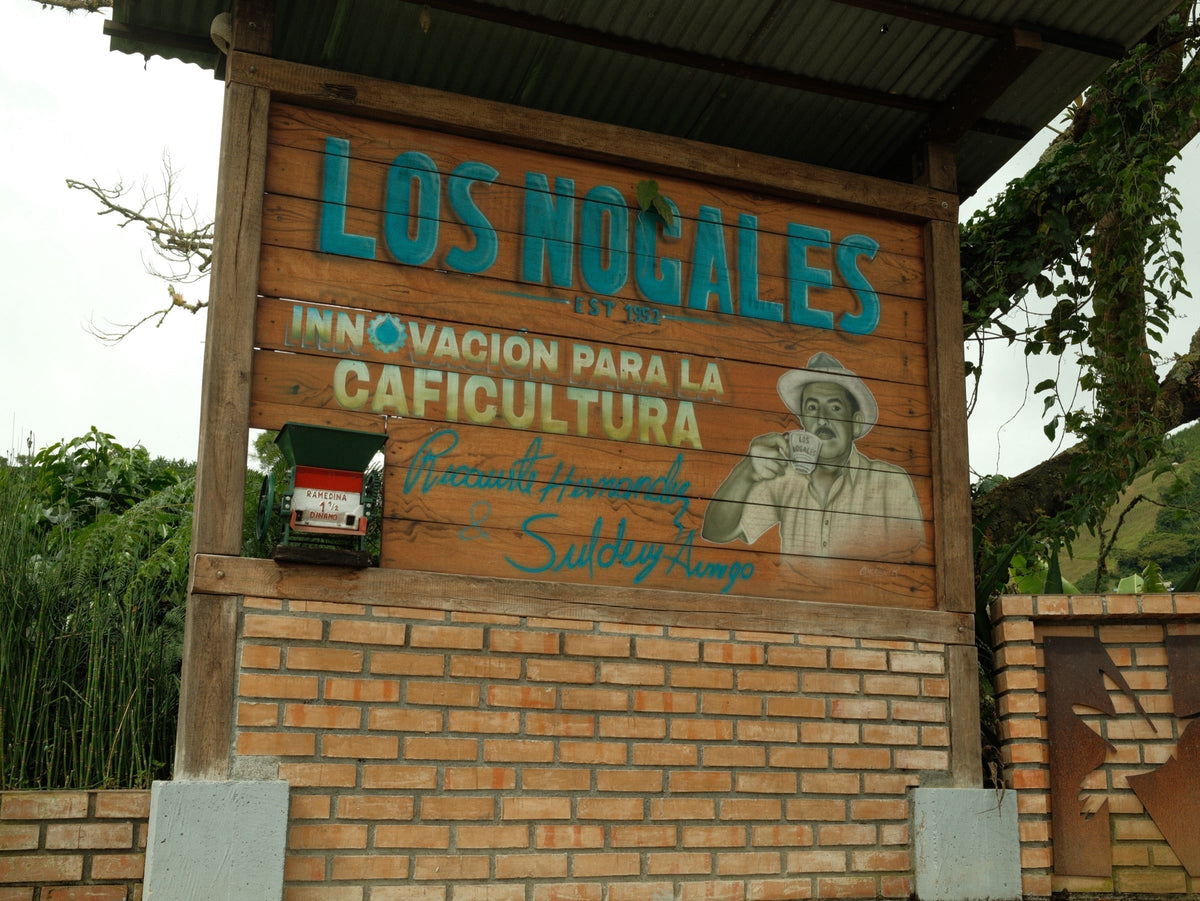
  • The Los Nogales sign at the farm entrance, “Innovación para la caficultura”
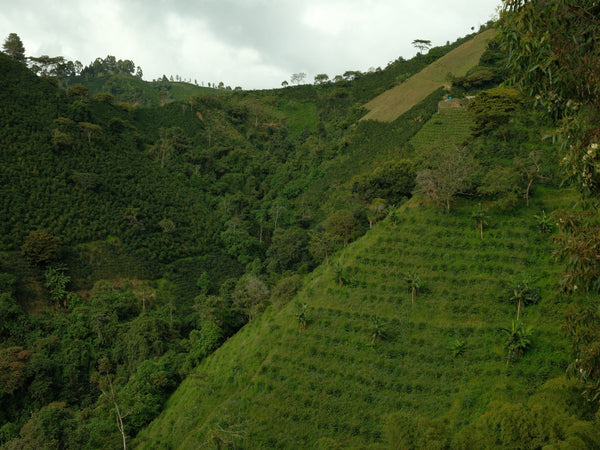
  • A steep hillside of coffee plants at Los Nogales
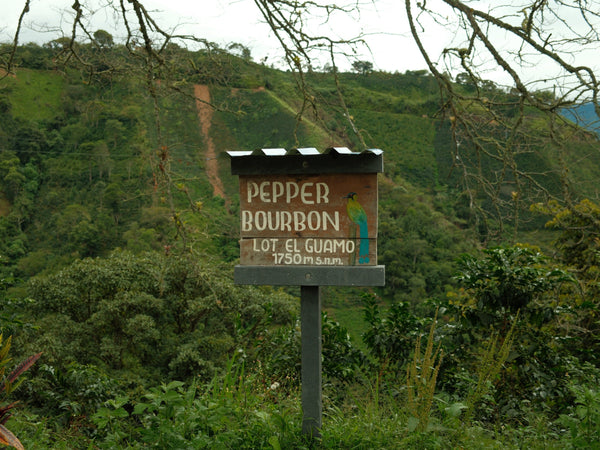
  • A sign among the coffee plants, Pepper Bourbon, lot El Guamo, 1,750 m above sea level
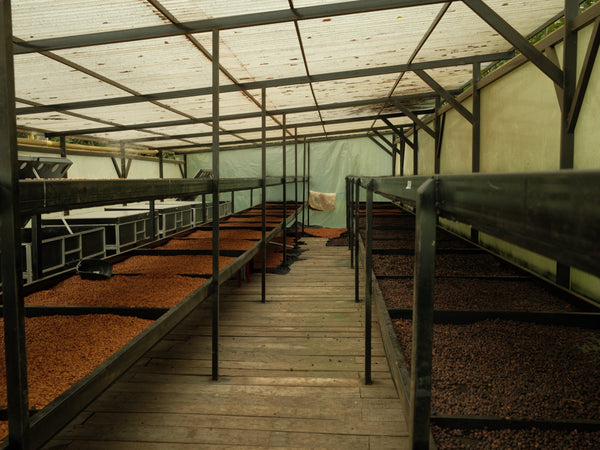
  • Raised drying beds under a covered greenhouse
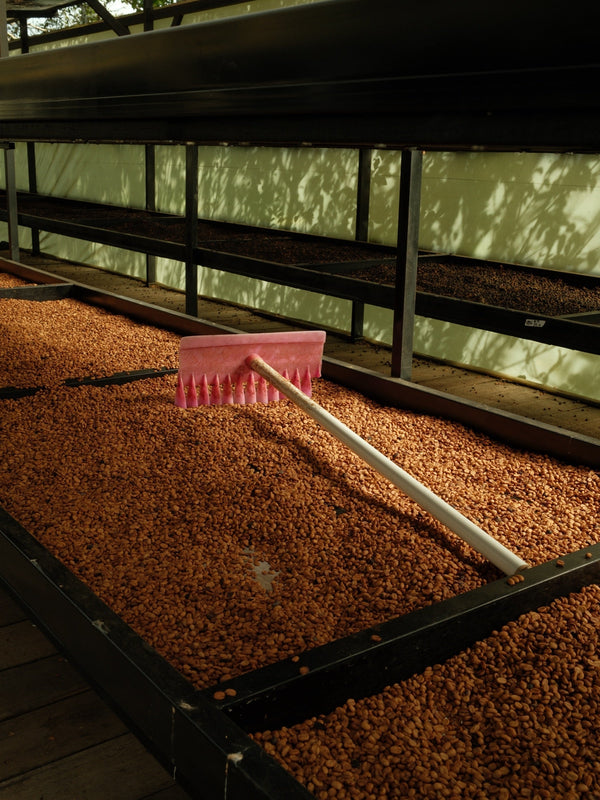
  • Coffee drying on a raised bed, with a pink rake to turn it
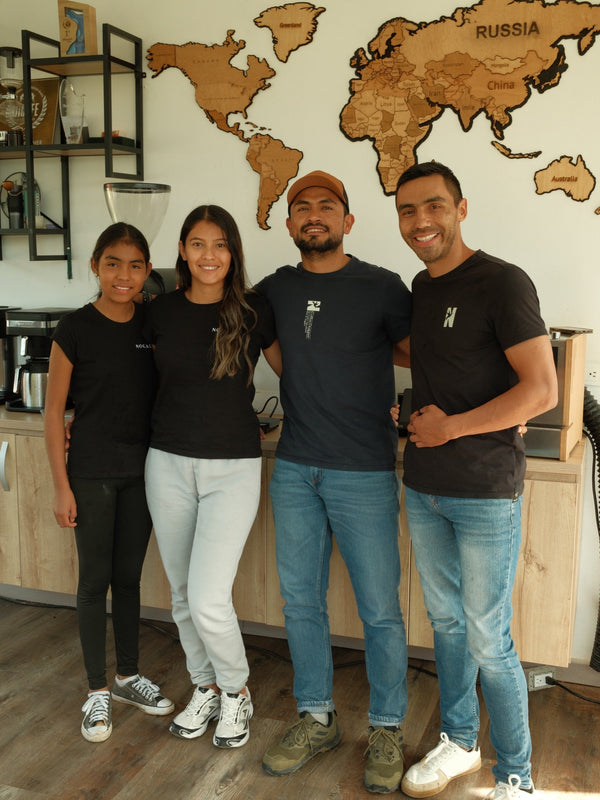
  • The Nogales Group team in front of a wooden world map
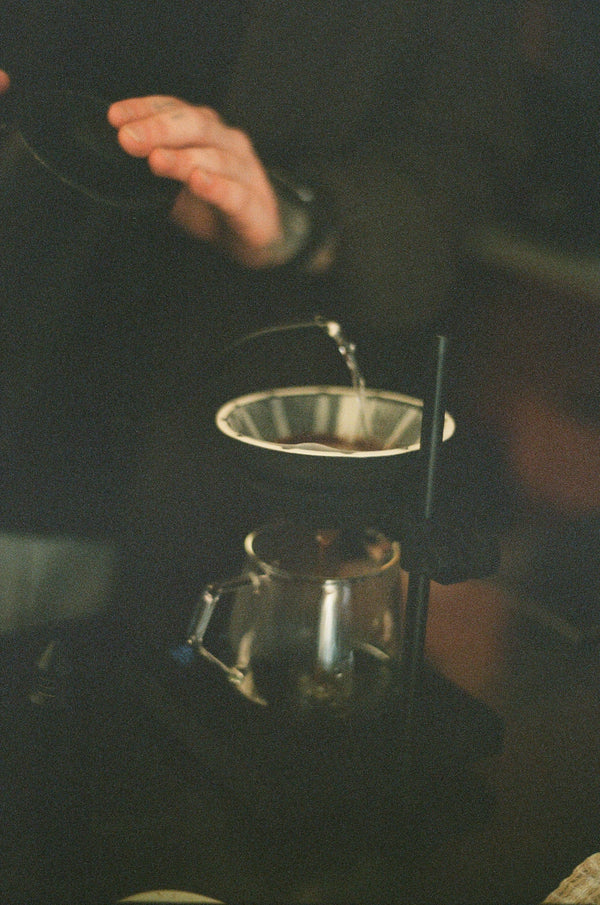
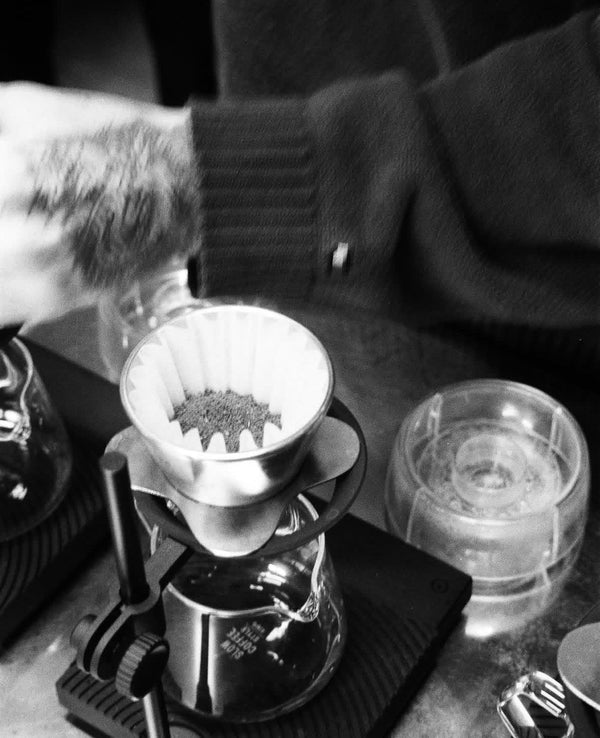
  • A hand at the pour-over stand, a metal dripper beside a glass server
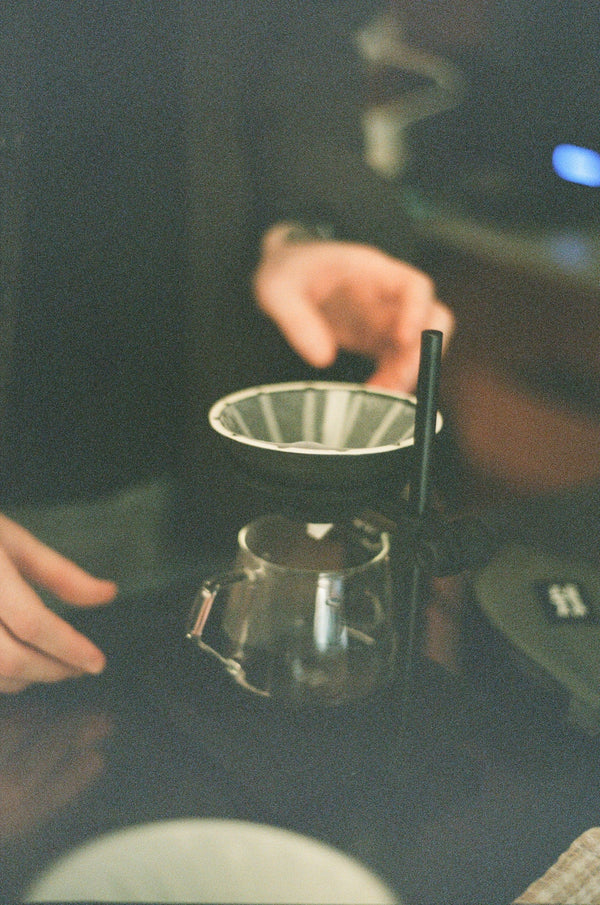
  • Setting the metal dripper on the pour-over stand
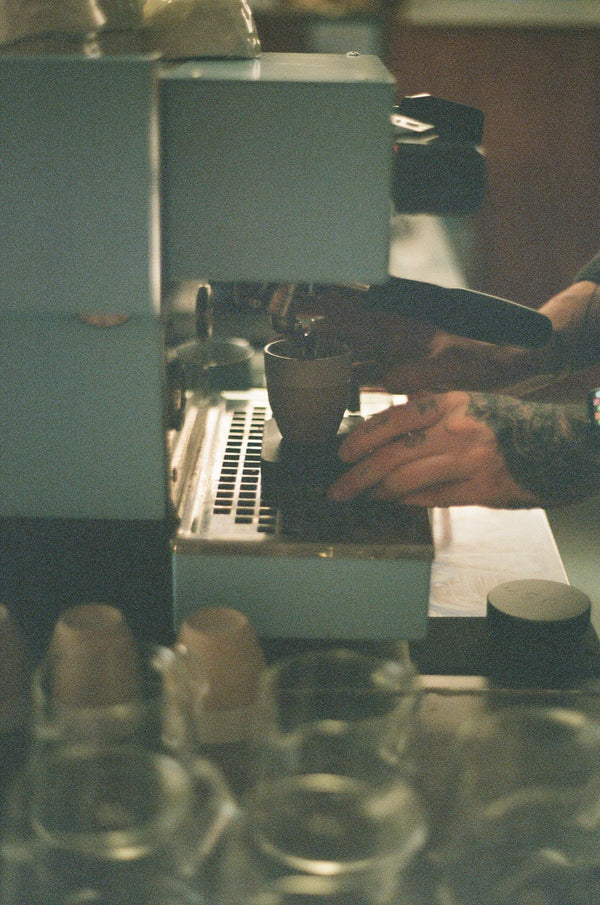
  • A tattooed hand at the grinder, glasses in the foreground

File 04 · Finca La Tormenta

The Finca La Tormenta coffee bag
An illustration by Edward J. Woolsey from his 1869 book, Specimens of Fancy Turning

File 04 · Sold out

Finca La Tormenta

Sierra de las Minas, Guatemala

Spec sheet

Origin
Guatemala
Region
Sierra de las Minas
Producer
Roberto Cheves and Ana Recinos
Variety
Geisha
Process
90h Cold Lactic Hidromiel
Altitude
1800 m.a.s.l

Availability

Sold out

Story

This collector's lot is the result of extraordinary terroir and meticulous processing craft.

Cold lactic Hidromiel fermentation of whole cherries for 90 hours elevates the variety's aromatics into something unforgettable.

Effervescent tropical fruit, vivid berry, and a silky, lingering finish born from the mist-laden cloud forests of the Sierra de las Minas mountain range in Guatemala.

Cup of Excellence national-winning Geisha from Roberto Cheves & Ana Recinos. Finca La Tormenta is a labour of shared passion. Roberto Cheves & Ana Recinos have built one of Guatemala's most celebrated specialty coffee farms together, on the edge of the Sierra de las Minas Biosphere Reserve. Spanning 242,000+ hectares and recognised by UNESCO since 1990, this reserve harbours the largest intact cloud forest in Central America. Home to over 1,690 species of flora, and 885 recorded animal species. More than 60 rivers originate within its peaks, sustaining entire ecosystems and communities. Roberto Cheves & Ana Recinos farm has deep respect for this living wilderness. Their coffees are a direct expression of one of Earth's most biodiverse landscapes.

Brew Notes

Brew Log 04

File 04 is a Cup of Excellence national-winning Geisha from Roberto Cheves & Ana Recinos at Finca La Tormenta, on the edge of the Sierra de las Minas Biosphere Reserve in Guatemala. Whole cherries, cold lactic Hidromiel fermentation for 90 hours. It is, honestly, one of the most complex coffees I've had the pleasure to roast.

Before the release, I took early samples to New York. I handed samples to some of the city's most celebrated roasters, and watched people taste it for the first time. That week is a big part of this log: a coffee like this shouldn't just be sold, it should be presented. Presenting coffee intentionally is a beautiful privilege, and seeing the passion for this project grow in New York is something I won't forget. The sample bags I carried in New York were 62 grams, on purpose: two 12 g filter brews, two 18 g espresso brews, and 2 extra grams, 0.5 g to purge the grinder before each brew. Nothing wasted, nothing short. I wanted to show people just how intentional I'm being with this project.

For me, this coffee is at its best 5–12 days post roast. My preferred brew:

  • Brewer: Orea O1, with April paper filters
  • Water: start from 0 ppm and mineralize after, to taste
  • Temperature: 91 °C
  • Dose: 12 g coffee to 200 ml water
  • Pour: 25 ml every 15 seconds, slowly - 8 pours total
  • Grind: dial it so the drawdown lands at 2:10–2:20

One detail that matters to me: in the middle of the brew, around 1:15–1:45, I pour slightly faster to increase extraction. That's where the juicy sweetness opens up.

In the cup you may find effervescent tropical fruit, vivid berry, and a silky, lingering finish. The aromatics of that 90-hour fermentation, carried by one of the most biodiverse cloud forests on earth, are truly unforgettable. The first feedback that came back from New York described it as full-bodied, with dried blueberry and beautiful florals. I'll take that.

When you first taste this coffee, you will notice the body right away. It's very creamy and full. As the coffee cools down, it begins to open, allowing the sweetness and florality to dance across your palate.

Coffees like this only exist if someone at every step decides the work is worth doing properly. The producer, the roaster, the barista, the person brewing at home. This log is my part of that chain: the recipe, exactly as I'd make it for you if you were standing at my bar.

File 04 released Sunday, November 15th, 10am at 1875 rue Payette, Montréal.

Thank you for reading.
File 01 · Finca Aurum

The Finca Aurum coffee bag

File 01 · Sold out

Finca Aurum

Masanamaca, Loja, Ecuador

Spec sheet

Origin
Ecuador
Region
Loja
Growing area
Masanamaca
Producer
Luis Carpio and Vanessa Iñiguez
Variety
Geisha
Process
Anaerobic Natural
Altitude
1660–1680 m.a.s.l

Availability

Sold out

Story

Luis Carpio and Vanessa Iñiguez are the producers behind Aurum Coffee in Masanamaca, Loja, Ecuador, near Podocarpus National Park at 1,660-1,680 meters above sea level. Working with varieties Sidra and Geisha, they use natural anaerobic and experimental fermentations to express their terroir. They apply scientific discipline and precision to their coffee, supported by a rich ecosystem of native shade trees, pristine water, cool nights, and high biodiversity. Their vision centres on consistency and excellence, alongside a strong social commitment to empowering women and fostering economic independence through coffee.

This coffee was directly sourced by Athanor. Their mission is to import and showcase the high range of diversity in Ecuadorian coffee.

File 03 · Cararango

The Cararango coffee bag
Globeflower, a photograph by Karl Blossfeldt from his 1928 book Urformen der Kunst

File 03 · Sold out

Cararango

Vilcabamba, Loja, Ecuador

Spec sheet

Origin
Ecuador
Region
Loja
Growing area
Vilcabamba
Producer
Galo Guerrero and David Palacios
Variety
Typica Mejorado
Process
96h Carbonic Maceration
Altitude
1850 m.a.s.l

Availability

Sold out

Process · 96h Carbonic Maceration

  1. Ripe cherries are sorted and sealed whole in tanks.
  2. The tanks are flushed with carbon dioxide to push the oxygen out.
  3. The cherries ferment in that oxygen-free space for 96 hours.
  4. They are then dried and milled.

Story

This release documents Cararango, a 2.7-hectare farm in the hills of Loja, near Vilcabamba, entirely planted with coffee. Founded in 2022 by Galo Guerrero and David Palacios, the farm focuses on Sidra and Typica Mejorado, exploring controlled natural fermentations at high elevation.

This lot is a carbonic maceration natural. Whole cherries are sealed in tanks for 96 hours, creating an oxygen-free environment where fermentation begins inside the fruit. This extended, controlled fermentation builds structure and fruit intensity while maintaining clarity and definition in the cup. Drying follows with close monitoring to stabilize the profile and preserve the character of Typica Mejorado.

Cararango is rooted in long-term agricultural work: regenerating dry soils, restoring biodiversity, and treating coffee as a living system rather than a product.

This coffee was directly sourced by Athanor. Their mission is to import and showcase the high range of diversity in Ecuadorian coffee.

Brew Notes

Expect high clarity with layered fruit and a refined sweetness. Dense, structured, alive.

File 03

Photos

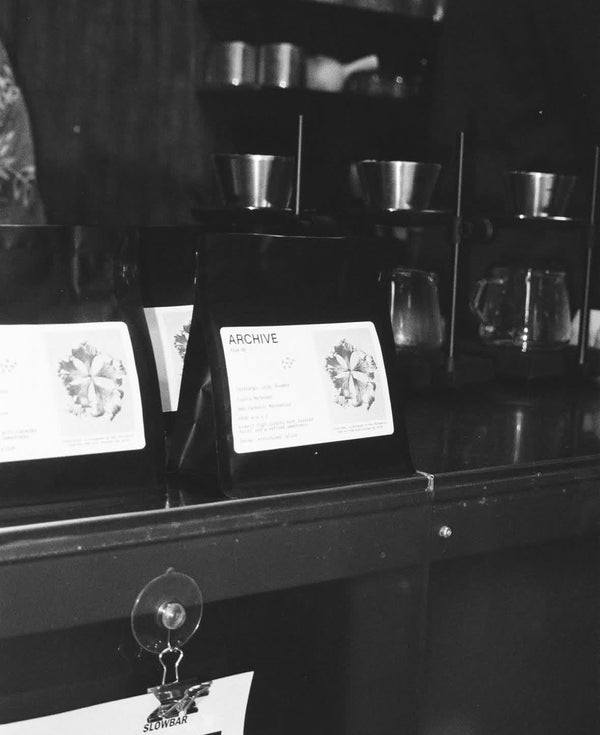
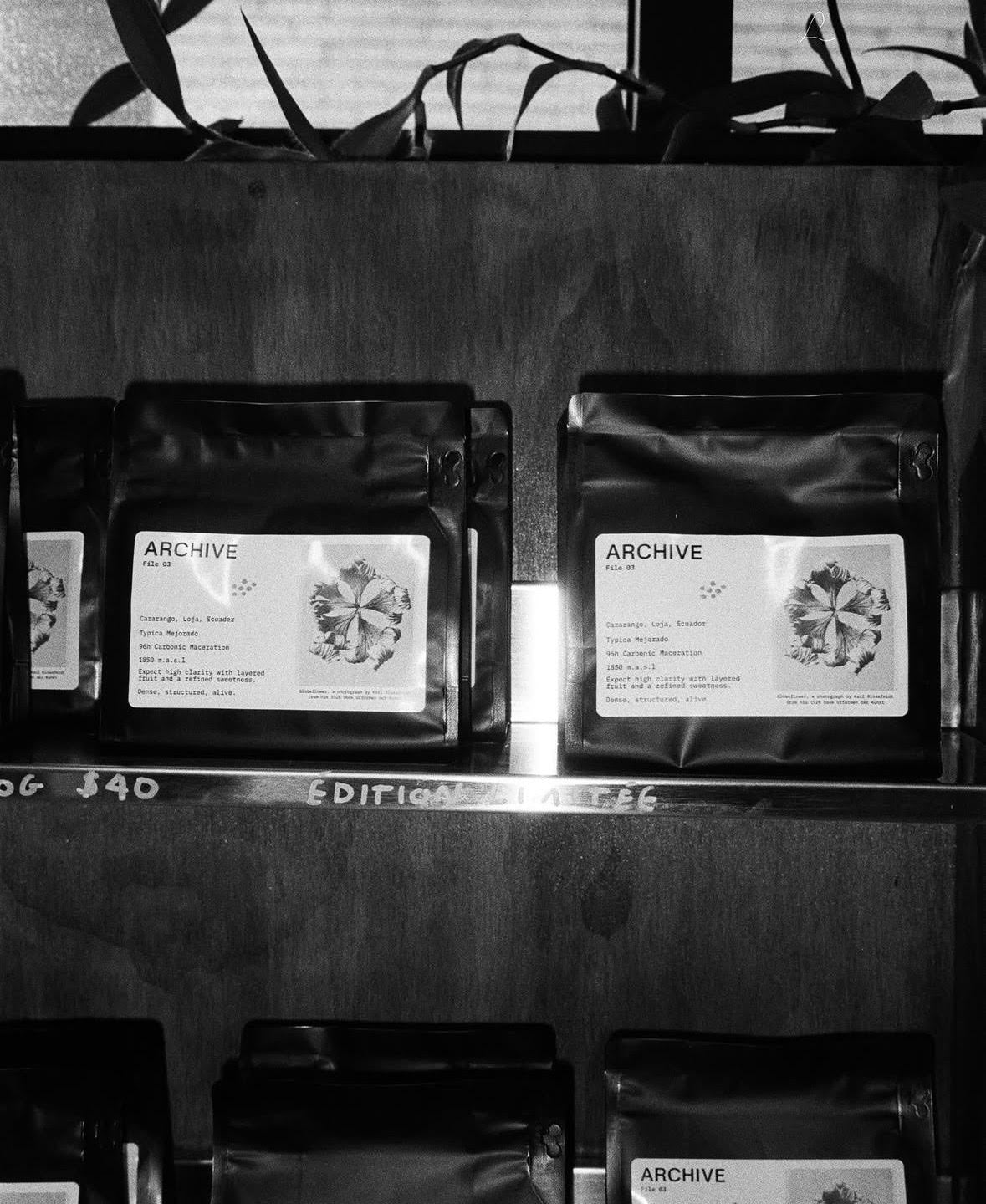
  • Bags of Archive Cararango, File 03, on a wooden shelf
  • A pour-over dripper filled with ground coffee on a scale, beside a glass
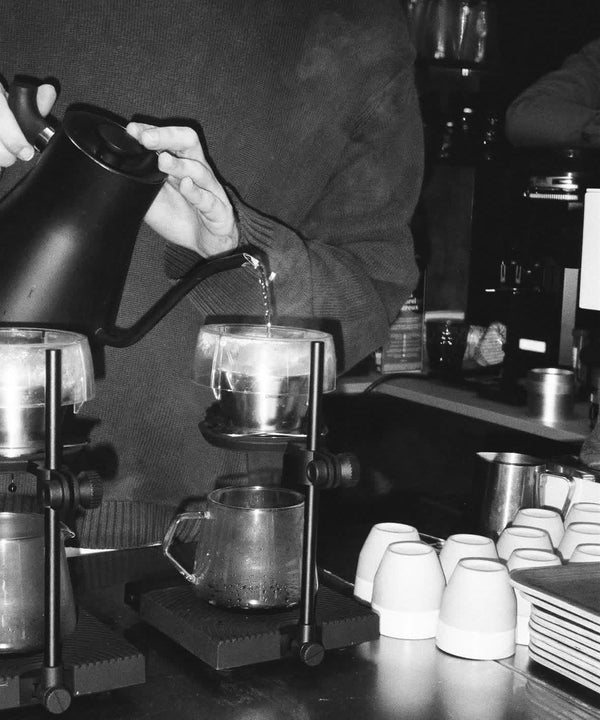
  • Hot water poured from a gooseneck kettle over a pour-over brewer, cups stacked on the bar
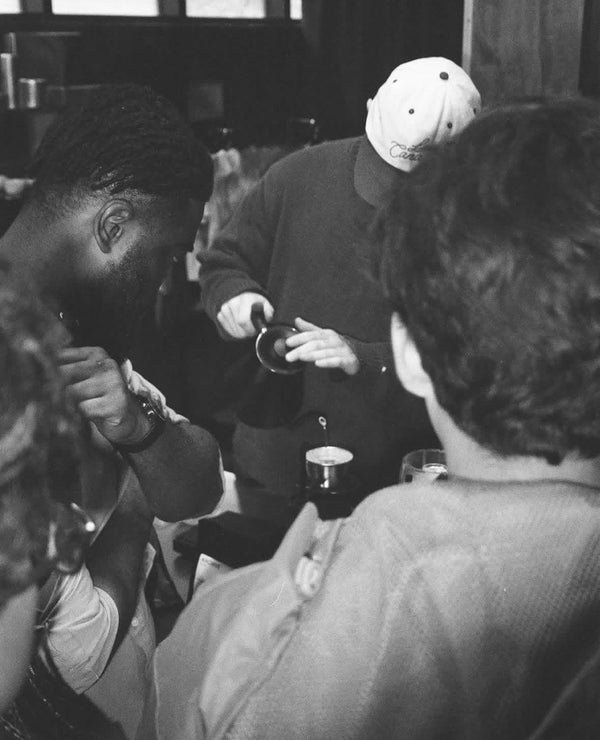
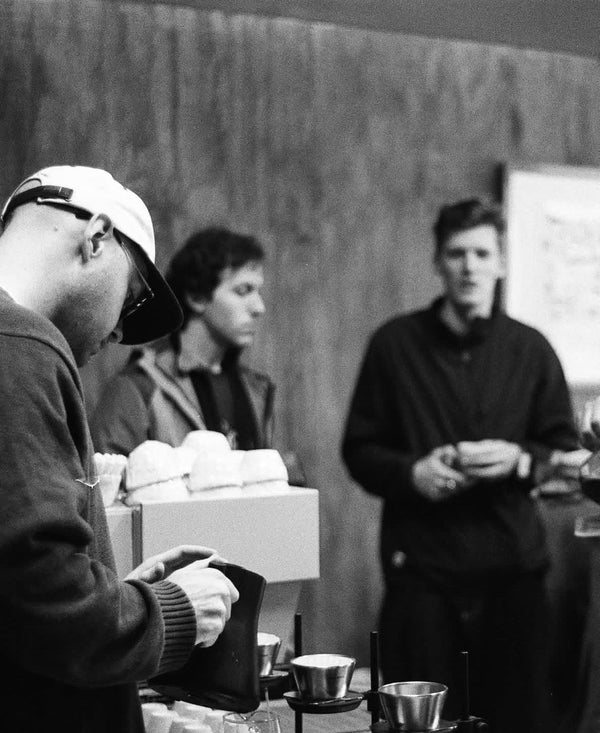
  • Guests tasting coffee around the bar, one holding his cup to his nose
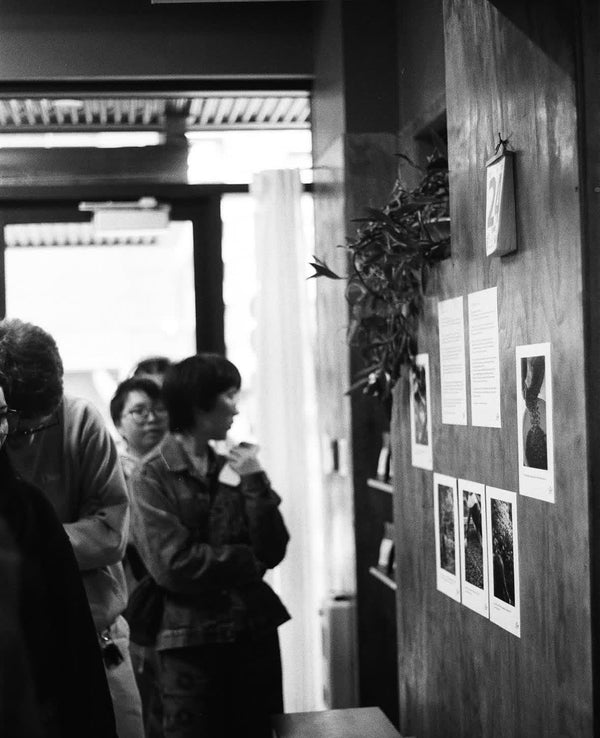
  • Visitors reading the photographs and texts pinned along a wooden wall
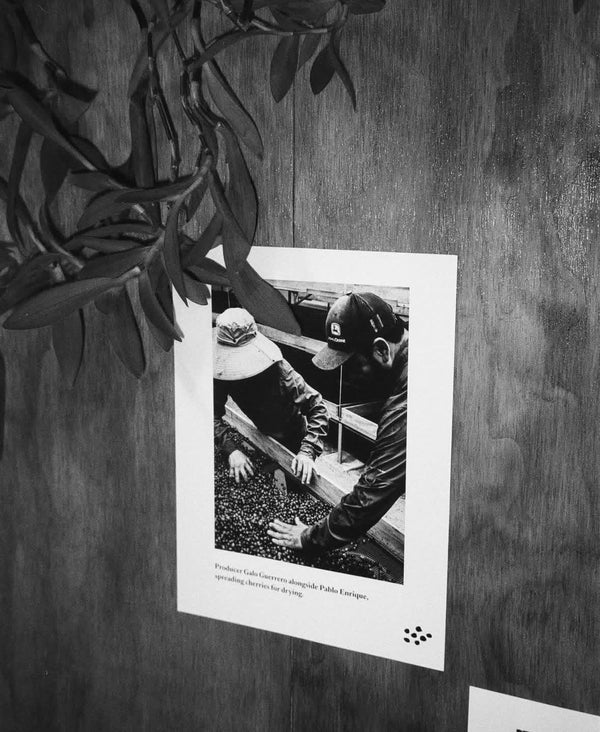
  • A print on the wall, producer Galo Guerrero alongside Pablo Enrique spreading cherries for drying
  • Baristas pouring coffee for guests at the brew bar
  • Cararango bags and their labels on display under the brewing stands
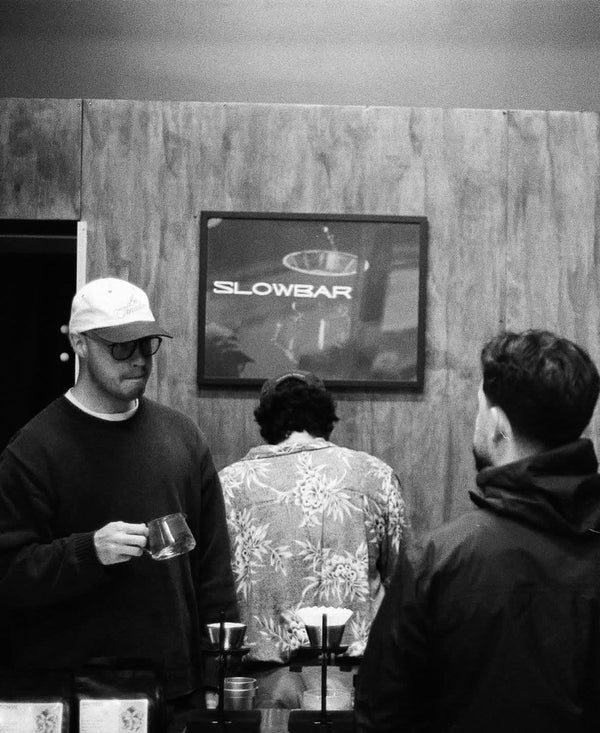
  • Three people tasting at the bar under a framed Slowbar sign
  • A full room during the tasting, people waiting at the counter

Brew Notes

Brew Log 04

File 04 is a Cup of Excellence national-winning Geisha from Roberto Cheves & Ana Recinos at Finca La Tormenta, on the edge of the Sierra de las Minas Biosphere Reserve in Guatemala. Whole cherries, cold lactic Hidromiel fermentation for 90 hours. It is, honestly, one of the most complex coffees I've had the pleasure to roast.

Before the release, I took early samples to New York. I handed samples to some of the city's most celebrated roasters, and watched people taste it for the first time. That week is a big part of this log: a coffee like this shouldn't just be sold, it should be presented. Presenting coffee intentionally is a beautiful privilege, and seeing the passion for this project grow in New York is something I won't forget. The sample bags I carried in New York were 62 grams, on purpose: two 12 g filter brews, two 18 g espresso brews, and 2 extra grams, 0.5 g to purge the grinder before each brew. Nothing wasted, nothing short. I wanted to show people just how intentional I'm being with this project.

For me, this coffee is at its best 5–12 days post roast. My preferred brew:

  • Brewer: Orea O1, with April paper filters
  • Water: start from 0 ppm and mineralize after, to taste
  • Temperature: 91 °C
  • Dose: 12 g coffee to 200 ml water
  • Pour: 25 ml every 15 seconds, slowly - 8 pours total
  • Grind: dial it so the drawdown lands at 2:10–2:20

One detail that matters to me: in the middle of the brew, around 1:15–1:45, I pour slightly faster to increase extraction. That's where the juicy sweetness opens up.

In the cup you may find effervescent tropical fruit, vivid berry, and a silky, lingering finish. The aromatics of that 90-hour fermentation, carried by one of the most biodiverse cloud forests on earth, are truly unforgettable. The first feedback that came back from New York described it as full-bodied, with dried blueberry and beautiful florals. I'll take that.

When you first taste this coffee, you will notice the body right away. It's very creamy and full. As the coffee cools down, it begins to open, allowing the sweetness and florality to dance across your palate.

Coffees like this only exist if someone at every step decides the work is worth doing properly. The producer, the roaster, the barista, the person brewing at home. This log is my part of that chain: the recipe, exactly as I'd make it for you if you were standing at my bar.

File 04 released Sunday, November 15th, 10am at 1875 rue Payette, Montréal.

Thank you for reading.
File 04 · Finca La Tormenta

Contact